
Strategy is a curious concept. You don’t really want anyone to know what is yours. But at the same time you reveal it as you go. You can’t help it. Sure, some nuances can slip here and there, but the core point doesn’t change:
When devising and deploying a strategy, you actively try to prevent the other side from understanding what are your end goals, while constantly revealing them through your actions.
It’s tempting to end this article right here - after all, it’s a pretty decent alpha. But this is only half of the story. After all, concealing your true intent is not that simple:
- You can’t write the opposite to what you want to do as it would quickly reveal your true intent.
- But neither can you play midwit reverse psychology games.
And when it comes to strategy in a democracy, there are people who don’t have access to classified versions and rely on the public one to act, for example your lower level soldiers and politicians. Additionally, it aims to put the population at ease, showing roughly what is the plan going forward.
Ultimately, your National Security Strategy (NSS) needs to be vague enough to not reveal your hand to your opponents, but also detailed and true enough so your military, politicians and population can act accordingly and understand what is (roughly) going on.
Masking Intent
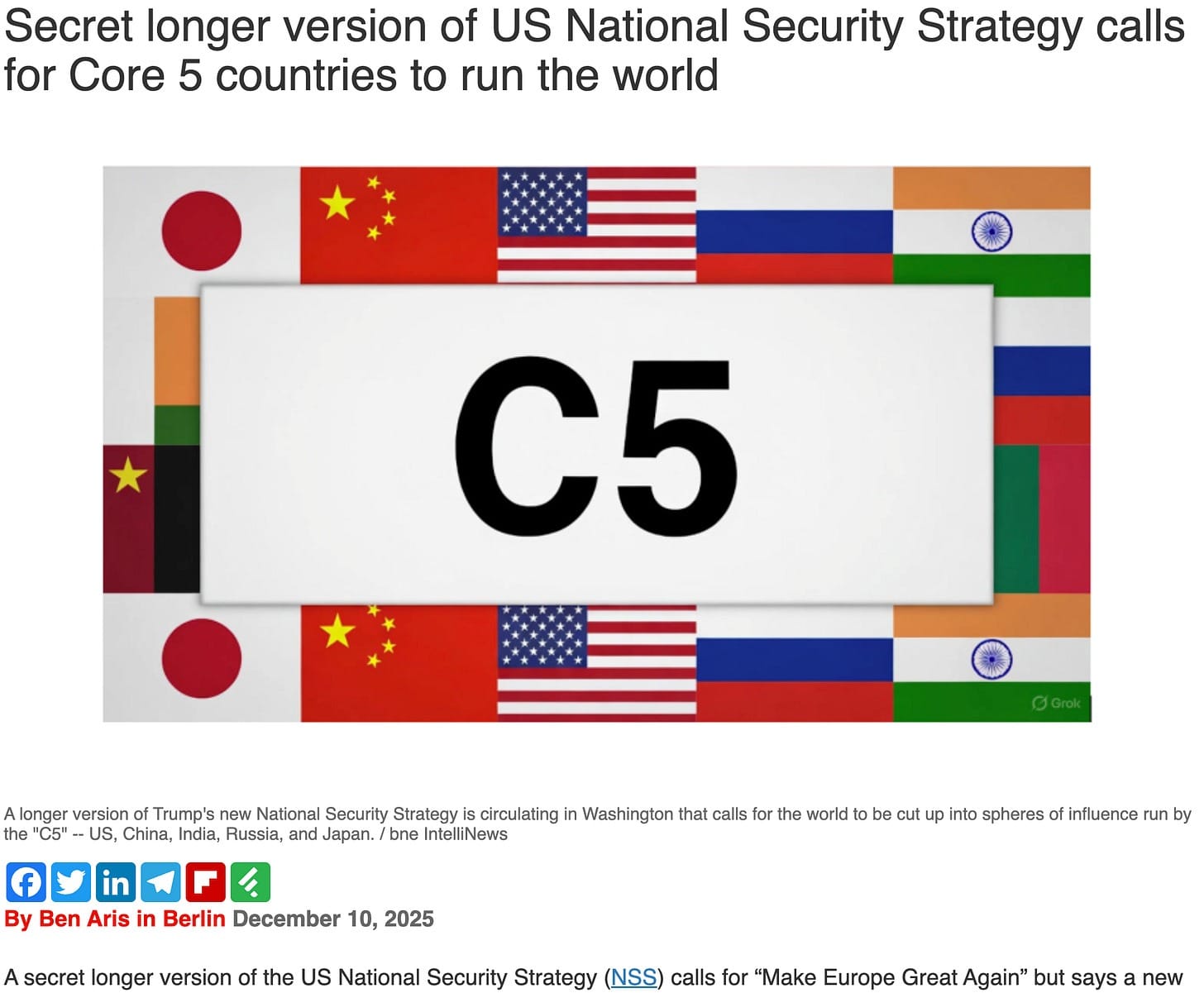
Since the watered-down version of the NSS we see is the child of the real one (if you think there is no 10x more detailed classified version, we need to have a serious conversation), inevitably some details will slip. For an average observer they are invisible, but a curious eye can draw a decent sketch based on the clues.
And that’s what I will do today. There is no use in commenting what is in the NSS - it’s obvious to everyone even remotely interested in global affairs. But there is plenty of value in catching the clues and drawing a picture.
What This NSS Isn’t
Before we go to to my thinking, I believe it’s best to go through some of the commentary that surfaced after the publication and scrutinize it. Some of these “geopolitical analysts” are nothing more than propaganda mouthpieces and it shows.
1. The US Is Abandoning Primacy / Engaging In Offshore Balancing
This is a popular opinion in Poland, propagated by one of the most popular “geopolitical analysts” there (iykyk). In essence, he claims that by showcasing prioritization, the US admits that it can no longer uphold the hegemony and chooses to support regional champions to balance regional adversaries (what he calls offshore balancing; in English of course, to sound more cosmopolitan).
It’s all fine, except it is total bullshit. Yes, the US chooses to support regional partners to use them to balance regional adversaries. It’s hegemony 101. And it is something the US has been doing for decades:
- MENA: Israel
- Asia: Japan, South Korea, Australia to some extent
- Europe: NATO
The main priority of US hegemony is preserving freedom of navigation control over the “freedom” of navigation, not spreading democracy. And to preserve it, the US must sometimes threaten or engage in war halfway across the globe. But the US always knew that it cannot fight multiple major wars at the same time.
It’s quite the contrary - the US is very much interested in maintaining its hegemony, that is why the US prioritizes. It’s just the enemy that is in fact major, because it was left unchecked.
2. The US Is Abandoning Europe
Is it? Last I checked Europe is ahead of the Middle East in the order of priorities. But first things first.
The deal was always simple - security for political alignment and assistance. NATO countries enjoy safety for aligning with the US on security issues and assisting from time to time. Now the US demands just that: “Align with us and we will protect and support you”.
Well, almost. Outside of the fact that the US first supported the war in Ukraine and now it doesn’t. But priorities change and the message from across the pond is understandable:
We can’t support this war effort right now, either do peace on somewhat fair terms or support it yourselves. But we’d rather you focus on different stuff that we could help you in.
Trump is right in saying that Europe is wealthy and should be able to afford its own defense. The mighty Soviet Union is no more and the EU represents the most developed block in the region. There is no demand that Europe should be strong enough to counter China. But Russia is a fair ask. Especially in a brokered peace.
Seeing other priorities, Trump would rather work on Russia to abandon China. But he’s good enough with Europeans fighting, as long as they are the ones paying for it. Because while it deepens the Russian relationship with China, it also weakens both countries. Which isn’t half bad if your second main priority is dominance of the Indo-Pacific.
3. The US Is Doing A 180 Degrees Change
In the end, the US is just adjusting its strategy. It’s not a pivot, it’s a refinement. After all, even during the Biden administration the focus shifted away from the Middle East towards Europe and China. They also tried to reign in Venezuela (although unsuccessfully).
The difference now is that the change is happening quicker. And it’s out in the open rather than hidden behind a veil of distractions.
But the one stark difference between the two administrations is immigration - while the previous one believed (or was paid to believe, unimportant) that illegal immigration is OK as it boosts the labor market, the current one feels it impacts social cohesion too much (and they are most likely right).
Sure, Trump is an unhinged showman with signs of getting too old for the job. But let’s be honest - he’s not the mastermind, he’s the (formerly) witty performer. And overall, the strategy is coherent and makes sense. It tries to address the problem directly and proposes a clear set of goals to succeed. It’s more than we ever got.
And while it’s beyond the scope of my analysis, I think it’s a sign of progress. There are a lot of holes and gaps in the strategy (as I will show later on), but it is the first one to truly realize the size of the problem and to try and solve it
Sacrifices Must Be Made
I took it on myself to read previous National Security Strategies and one thing is clear - while the previous one already recognized the threat from China-Russia axis, it treated it as yet another “pain in the ass” that needs to be handled, rather than a systemic risk to the entire global order. It clearly states the problem the US is facing and sets proper context for further propositions.
The current doc is also different in structure, signifying that it was build from ground up. Both developments are great progress, but we are in 2025 and the global supply chain war started in 2013. The US is late to the game. Thus it chooses priorities.
The new strategy is made from first principles. At its core it recognizes that the US is not omnipotent. It never was. But it establishes clearly that the US seeks to maintain its global hegemony - from technological leadership, through making energy the US main export to ensuring stability around the globe. The core concept of American primacy is alive and well.
What is gone is the presumption that The post cold war order would remain stable forever. That no nation would seek to advance, especially above the US. That the west can forever enjoy overconsumption through cheap eastern labor.
It turns out that goods do not self-appear in the store. China realized it years ago. The US realized it in 2024. Europe is still in denial. But the world moves on.
First Priority - Western Hemisphere
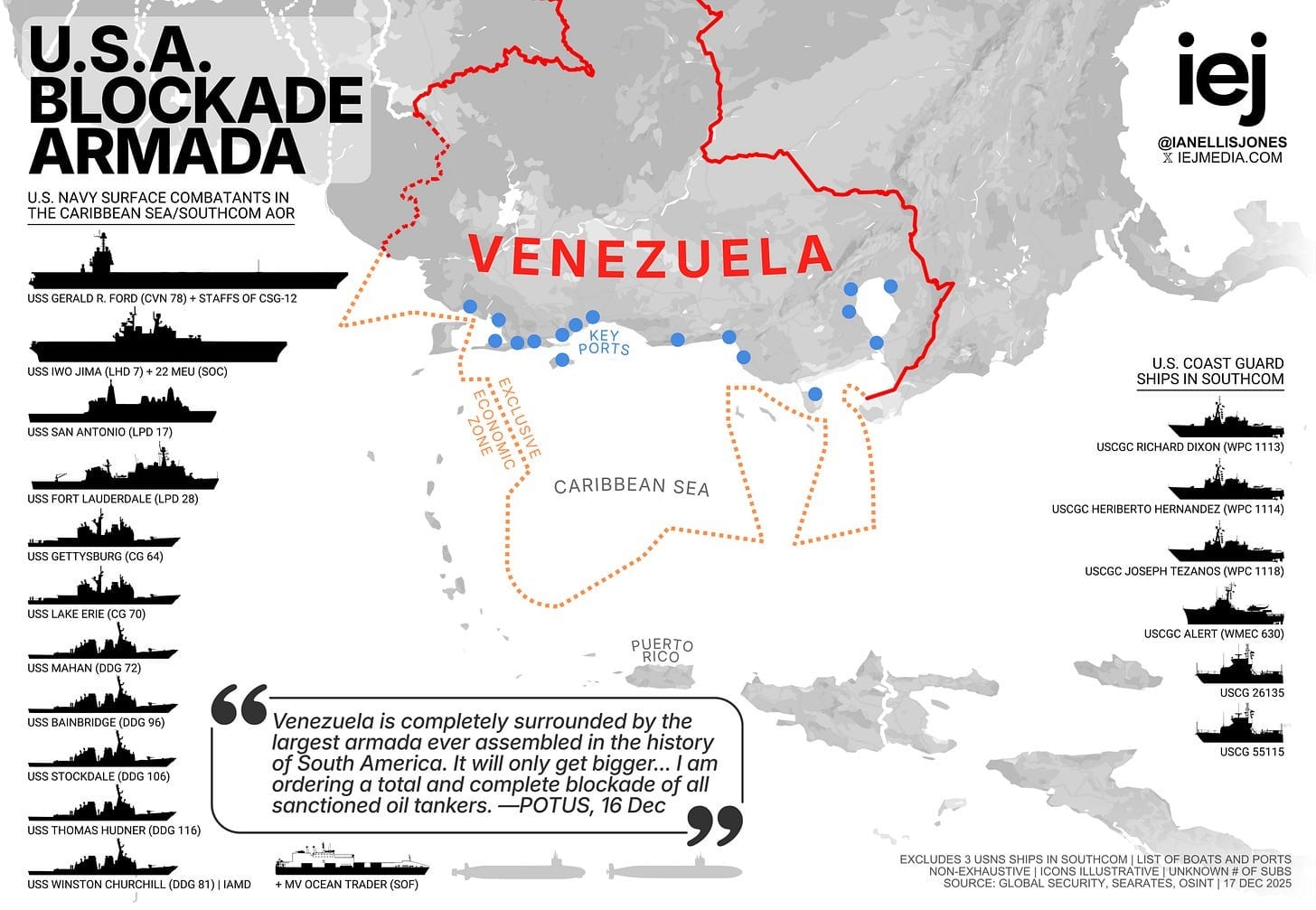
Its foundation lies in “America First”. But it treats “America” very liberally - it means the whole Western Hemisphere, rather than the US, or even North America. The idea behind such an anchor is simple - it’s a belief that a country cannot project strength outside if it’s weak inside.
Trump won the election on that, on the combination of economy, migration and drugs. And the truth is neither can be solved without controlling the whole hemisphere.
Economy
American nations are a natural trading partner for the US. The relative proximity, shared history and abundance of resources + human capital make for a perfect mix that is difficult to find anywhere else in the world. Yet majority of South America is ridden with both economic and societal issues. It is split ideologically, underdeveloped and ridden with team east influences.
Argentina wanted to partner with China to sell its beef. Brazil burns the Amazon to create new soybean fields to undermine the US farmers. Venezuela is a clusterfuck of Chinese, Russian and Iranian influences. Colombia and others are home to cocaine industry, while Mexico grows marijuana and imports fentanyl produce from China.
Central America, outside of El Salvador, is ridden with crime, from simple gang violence, to sophisticated human trafficking networks. Panama wanted to sell canal ports to China!
You can’t develop manufacturing, mining or general trade cooperation in such an environment.
Migration
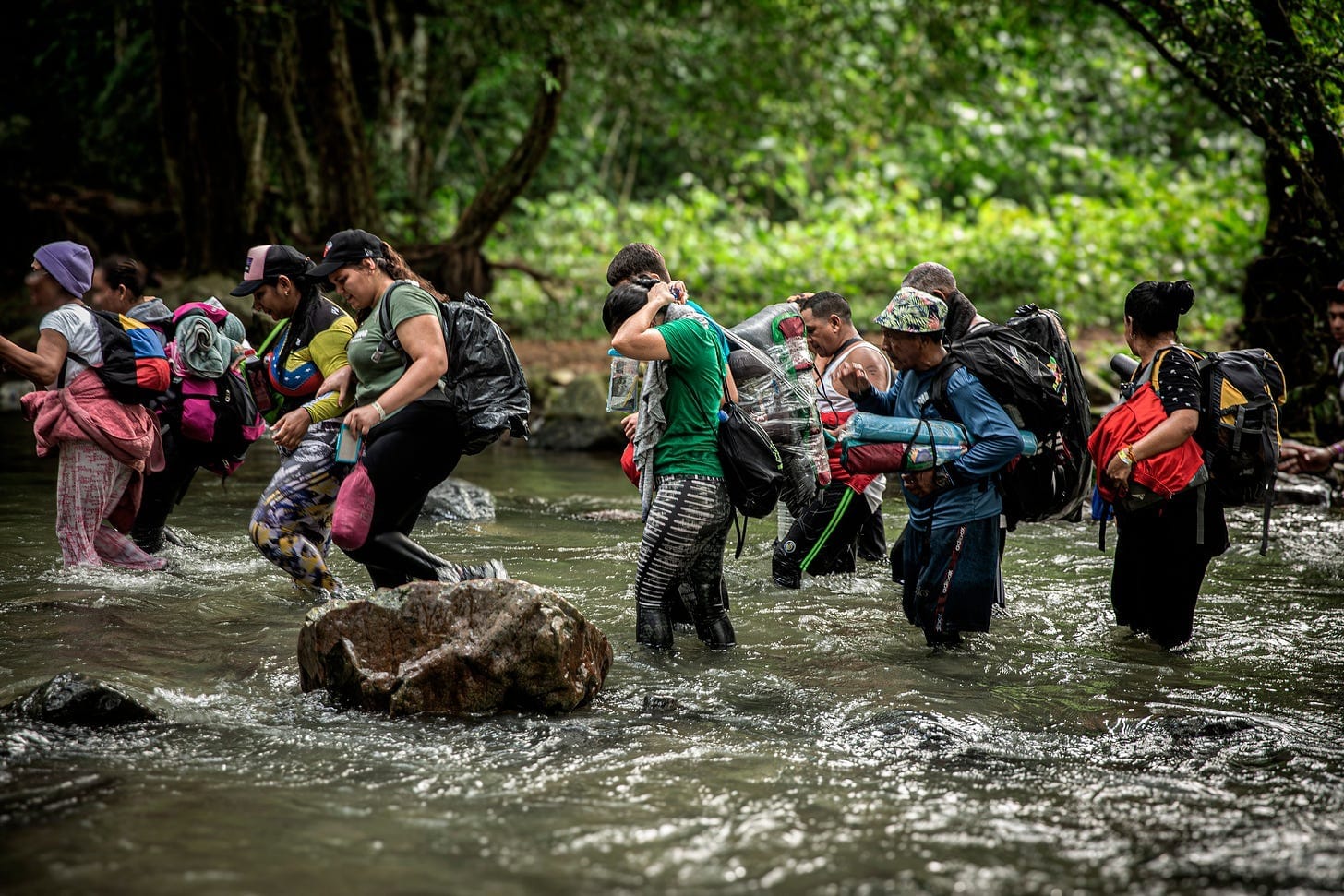
What would push you to cross 100 km through wild, tropical jungle? Source: FT
Drugs, violence, human trafficking, poverty, instability. Would you want to live in a country ridden with any of them? I suppose not. It’s no wonder that millions of people were looking to go to America. And they got help ;)
The previous administration thought that it can prop up it’s economy by importing cheap labor (or worse). But it forgot (or worse, knew) that by doing so it destroys the social cohesion, prime example being western Europe. Trump administration has a different approach. It wants to enable these countries to prosper, contingent on US energy exports. Based on a simple logic that when a country prospers, there is no outsized emigration.
Drugs

How do you really solve a problem like Kensington? Source: City & State Pennsylvania
Kill hard drugs and legalize soft ones. Trump’s policy in one sentence. The administration sees cocaine, fentanyl and alike as a threat to national security. Any country harboring cartels dealing with these drugs can expect chaos. But at the same time Trump sees marijuana as an opportunity.
An opportunity not only to get some votes in the midterms. But an opportunity for American farmers to grow a highly profitable plant, able to be sold across the region as well as in Europe, where medical marijuana is legal in most countries. Weed is no soybeans, but it gives US farmers a much needed lifeline in a decoupling from China.
Solution
What we see near Venezuela is just the beginning. The US will steamroll through the whole hemisphere (enlist & expand as they call it). First, team east must be eradicated, which means taking control over Venezuela, and by extension Cuba. By the end of next year, neither will look the same.
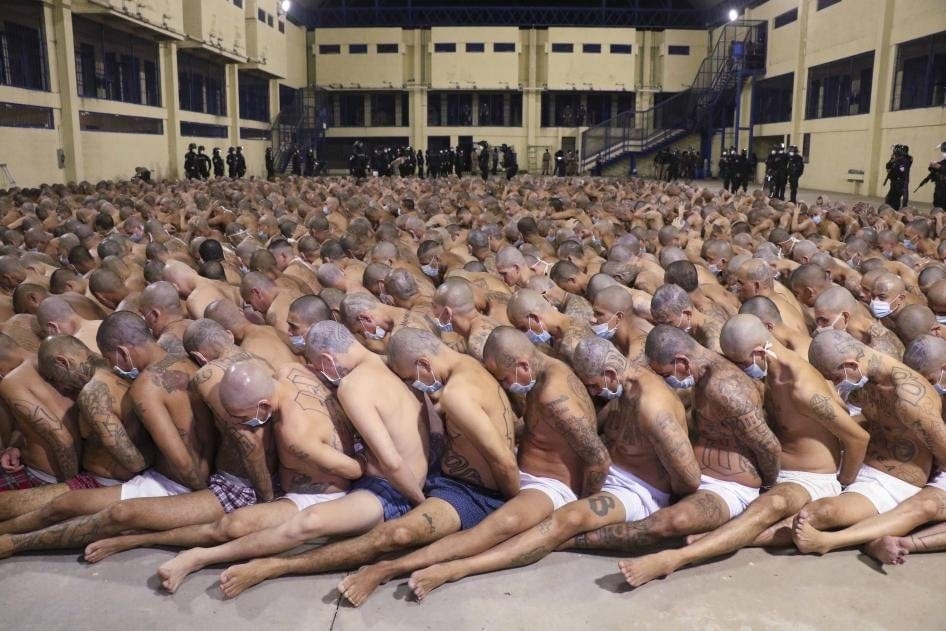
Then the US will look towards Colombia, Honduras and the likes - the countries that sit on the route between South America and the US. In Venezuela, Cuba and all of these countries the playbook is well-known and tested. El Salvador was the pilot project.
The US will get control either through a military intervention (Venezuela) or by coercion (Cuba, Colombia, Honduras, etc.), install a new government and brutally crack down on any kind of crime. Thousands will go to prison overnight, just like in El Salvador. And then the US companies will start to invest. Of course, it will take months to years rather than ays to weeks.
The toughest nut to crack will be Brazil. But from what we already see, the process of turning it towards the US has already started. Tariffs and sanctions are being dropped in return for shortening Bolsonaro’s sentence from 25 years to less than 2. It’s a gesture of goodwill while the real negotiations are being conducted.
Final aim: the western hemisphere will be a region generating stable demand for US exports while offering attractive investment opportunities. It will also act together on security issues, from the Panama canal, to the Arctic (we shall hear more about Greenland soon).
Second Priority - Indo-Pacific
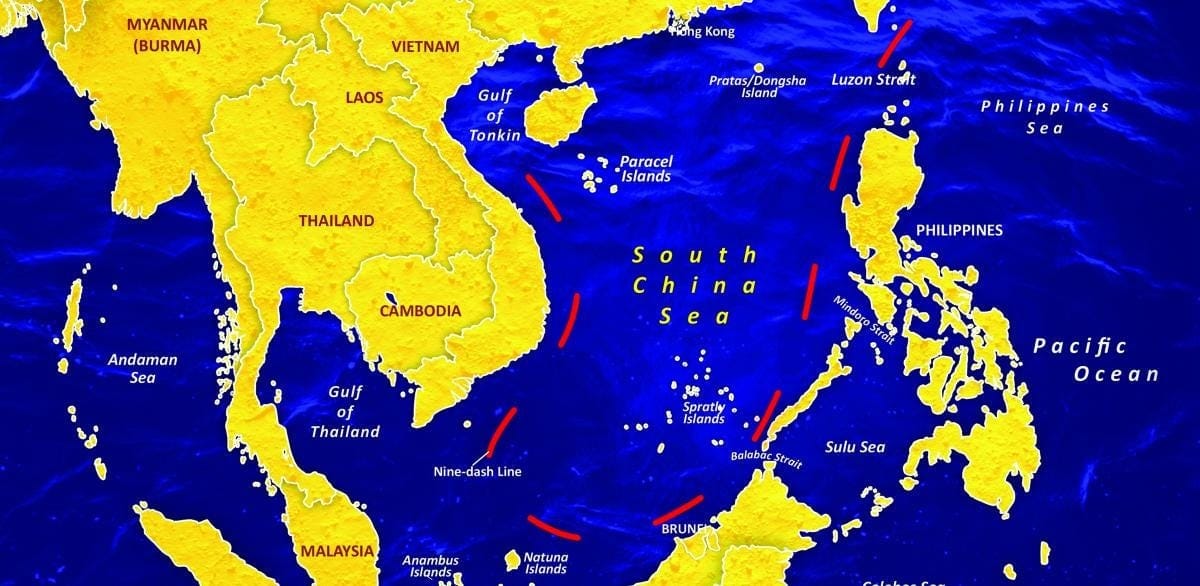
This part is different to the first. The western hemisphere was clearly presented as the US playground, where it alone sets the rules. Indo-Pacific is a region of clashing interests. Trump presents here a deal to both China and main allies:
- The main allies must assume part of the trade imbalance so the US is able to re-shore key industries.
- China can maintain the current position in the pecking order, but it needs to significantly increase domestic consumption and stop its “unfair practices”. It also will also not trade with team west when it comes to high tech and critical industries.
- The US must form a strategic alliance with India.
- The US and allies must bring as many middle and low-income countries to team west.
- China will not seek to control South China Sea or any other critical part of the region.
The US also establishes 2 red lines in the document:
- The status quo around Taiwan shall not be challenged.
- No country can control and establish a toll on any sea route in the region.
The strategy is very direct when it comes to the obvious - courting India and protecting sea routes. Because there is no universe in which the US willingly gives either one to China (especially India since the two are natural enemies).
Thus we shall focus in where it is lacking in any detail. While we have a rough idea when it comes to the plan for China, allies and India, we know nothing about 1 bit of the deal - bringing “global south” to team east. This is the real war being waged in the Indo-Pacific - it’s a war for resources and human capital.
South East Asia
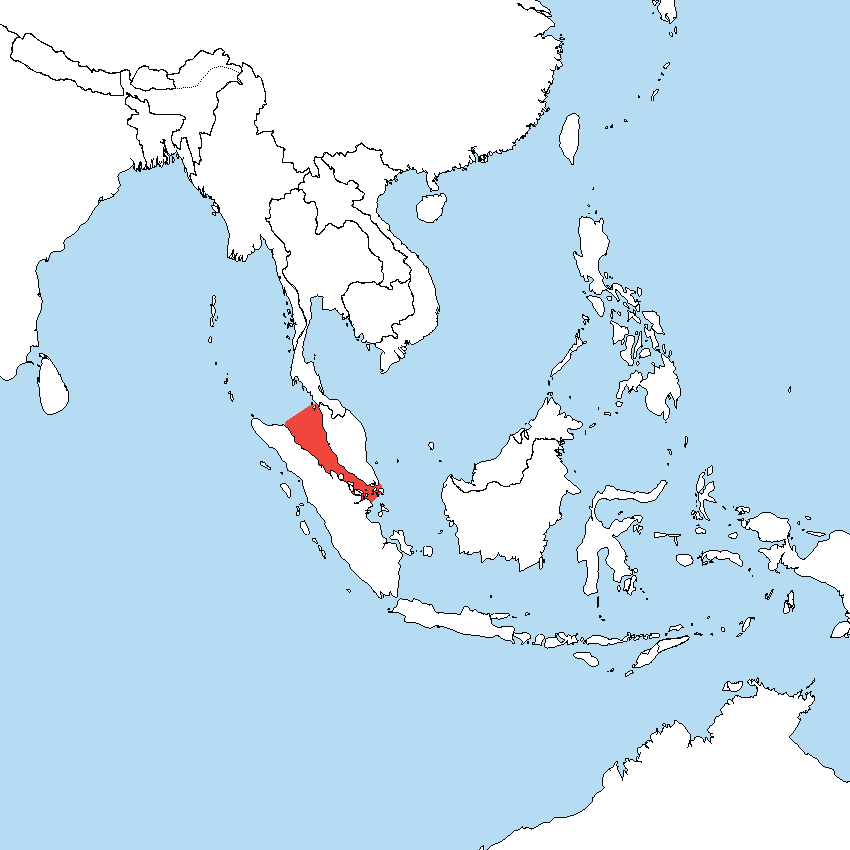
Per ASEAN, the South East Asian countries boast a population of over 680 million people. More than whole South America, roughly the same as Europe. And there, population is still growing rapidly, especially in Indonesia.
World’s main nickel producer (Indonesia), rare earths (SEA countries accounting for 20% of global reserves), ca. 50% of global tin reserves, plenty of oil, coal, bauxite (reserves) and other strategically important resources. Proximity to key trade routes (especially Indonesia, which could single-handedly block access to south China).
And yet, the NSS only mentions Thailand and Cambodia out of the whole region. And not in the main body of the document, but in the introduction when mentioning conflicts that Trump ended (unsuccessfully it seems). You could argue that South East Asian countries are mentioned collectively as part of the Global South, where the US argues a new strategy of development financing is needed, but to say it’s vague is an understatement.
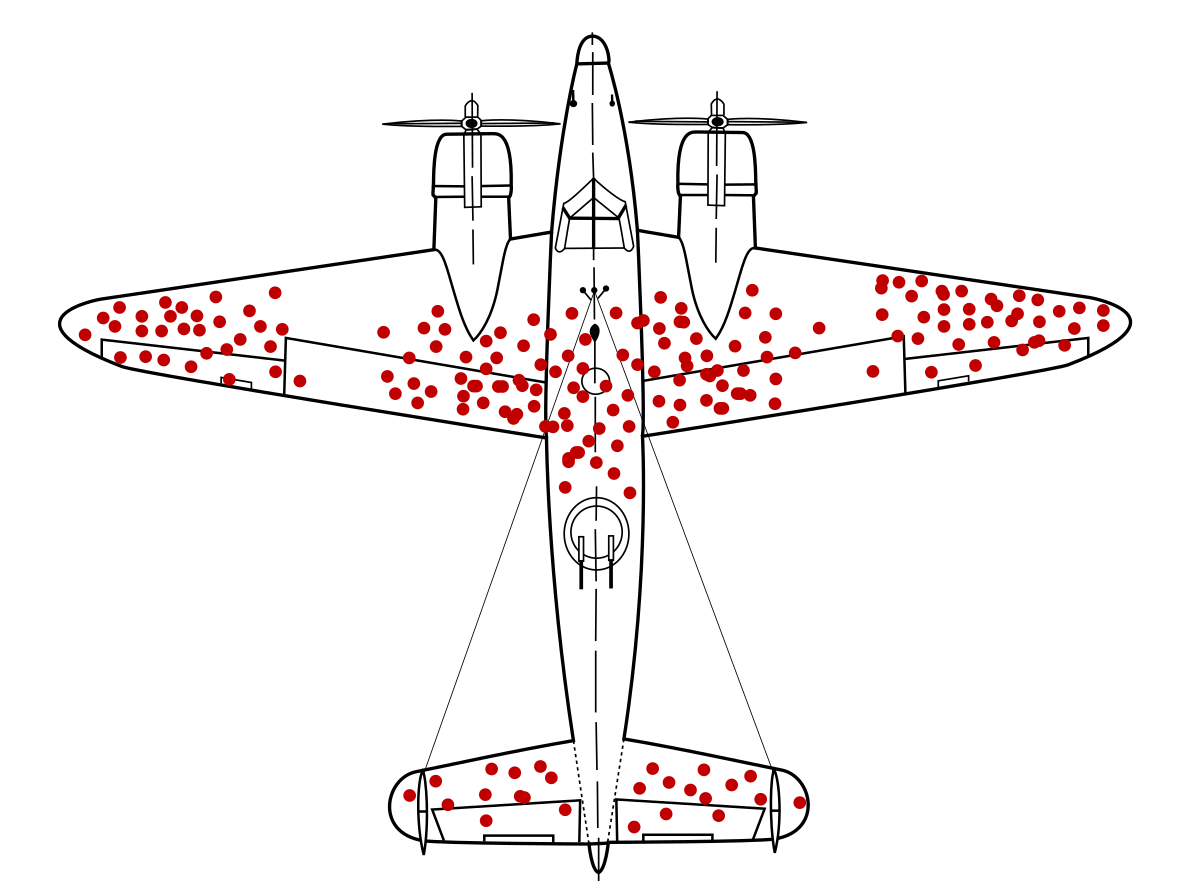
In my opinion this is done by design. While “geopolitical analysts” focus on Taiwan policy, relationship with India or increased military burden sharing for Japan and South Korea, they entirely miss the theater in which the fight for Indo-Pacific will happen.
But this is the topic worthy of a standalone article, especially in the context of the Thailand-Cambodia war as well as the situation in Myanmar. Expect it by the end of the year!
Third Priority - Europe

To the shock of the old continent’s elites, the NSS doesn’t really focus on Europe. Instead, it chose to lecture its nations about morals, values and civilizational pride, amplifying the growing rift between once great allies.
But under the veil of emotional reactions lies a simple reality. Trump administration believes that Europe faces a far more dire issue than Russian aggression. There is a clear parallel to the situation in the US - Trump sees migration and wokeness as public enemy number one, and there is plenty of both in Europe.
Trump wants to see Europe undergo the same changes as he is implementing in the US. More conservative governments, focused on fixing internal issues before turning the focus to the outward.
That is why he is pushing for peace with Russia. He sees it as a strategic pause, allowing Europe to get rid of illegal migrants, fix the military and emerge stronger. His speeches and the NSS is pretty clear in suggesting that this alone might discourage Russia from breaking peace a few years down the line.
Fourth Priority - The Middle East
Trump sees the region as solved. Israel is strong enough to counter Iran, but at the same time weak enough so it does not dominate the region over Turkey and Saudi Arabia.
Turkey, while mostly autonomous, is a NATO ally. Saudi Arabia was just designated a major non-NATO ally. And Iran is too weak to cause any trouble for the foreseeable future.
As long as energy exports are under US influence, the region does not require constant attention.
Fifth Priority - Africa
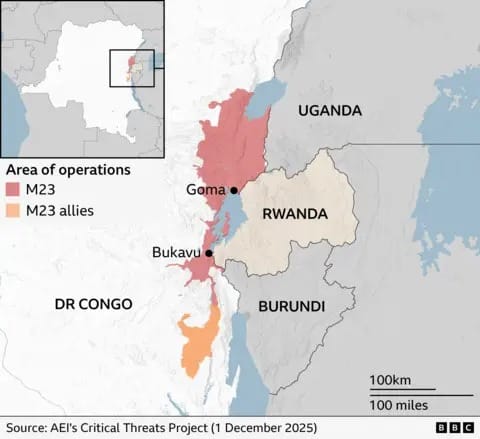
Here the administration remains somewhat misguided. It rightfully doesn’t see a reason it should have a prolonged commitment, but it is lacking when it comes to the real solution.
It proposes to upgrade the relationship with some nations, from aid-based to trade and investment-based. However, if they choose to do so, they will be swiftly met by Russian and Chinese resistance.
Africa is definitely a region that got too little attention in the strategy, which might be connected to the fact that Europeans, for whom Africa is a natural place to secure business, are not seen as trustworthy at the moment.
Holes, Mistakes And Outlook
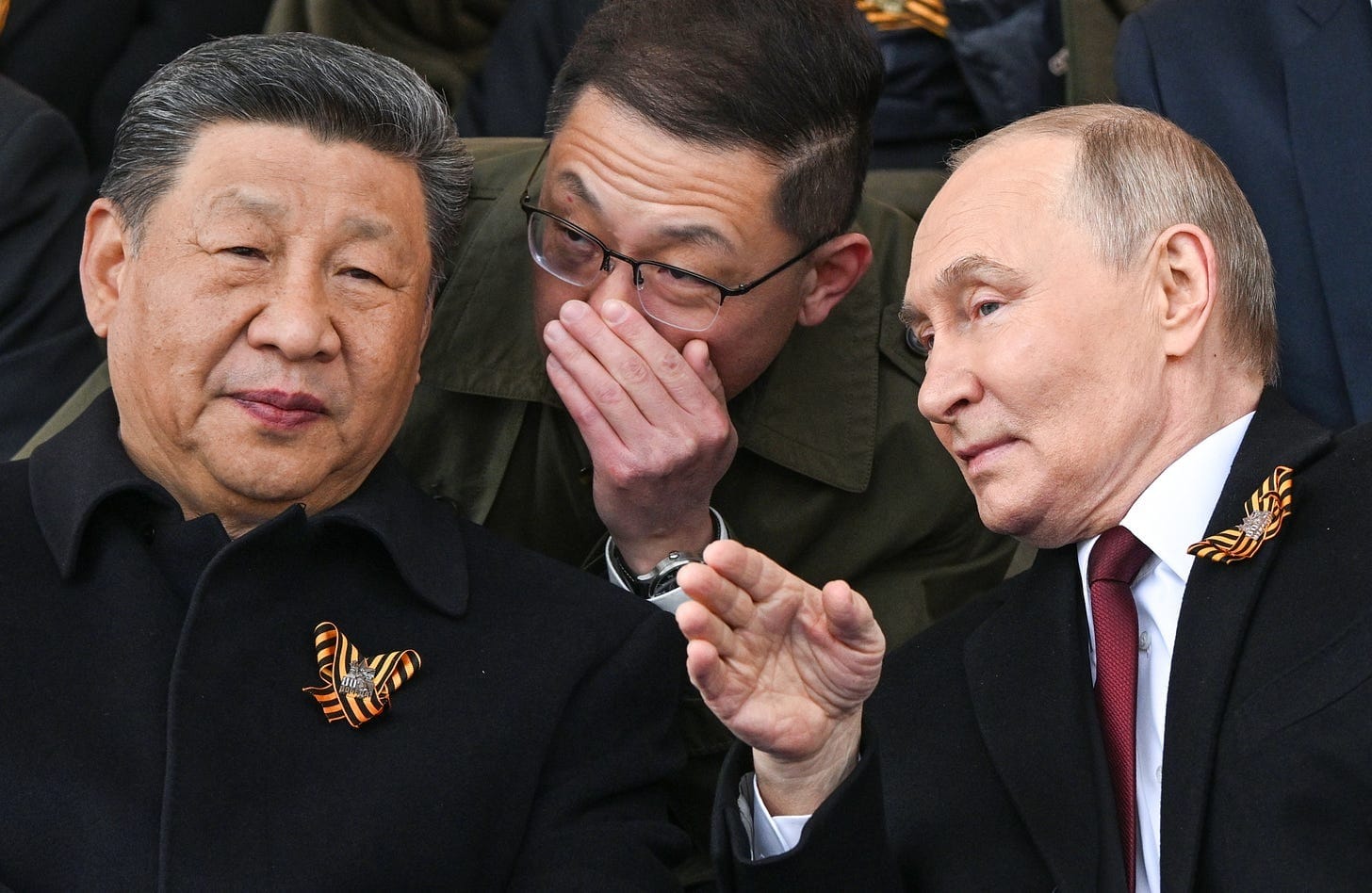
All strategies sound great when you put them on paper. The real question is though, how can the adversaries react to it to counter it? How can team east derail the efforts of the Trump administration?
First and foremost, team east should (and will) focus on Africa. While the US is busy in the western hemisphere and Europe is fighting the existential war with Russia, China and Russia should incentivize and coerce African nations into team east. From development financing to military coups, we already see it happening.
This way, team east can secure resources and demand for its exports. And this will cost Europe dearly. From continued instability and migration to pressure on main trade routes to Europe to resources, that were and should be under European control.
Second priority is Europe. Russia sees the rift between European nations and the US and is using it to its advantage. Contrary to popular western reports, domestic situation in Russia is pretty good and it is more than capable of fighting a prolonged war in Ukraine. It is also adept in hybrid warfare, destabilizing European nations. It is in team east’s interest to maintain maximalists demands during peace talks while engaging with America. Best case scenario - Europe is left alone to deal with Russia as this is the scenario in which NATO can and will be tested.
Third priority is a dual one. On the one side, team east should try its best to lure South East Asia away from the US. And it can buy itself time to do so by forcing the US to commit to western hemisphere for too long.
Ultimately team east will aim to overstretch the US capabilities, forcing it to do what it has explicitly written it will - to prioritize. It will aim to win Africa and severely weaken Europe. It will do what it can to prolong engagements in the western hemisphere. But the ultimate fight will be for the South East Asia.
And to give you a teaser for the upcoming SEA deep dive, it’s not all about Thailand-Cambodia conflict. I’ll also cover Myanmar, and most importantly the Strait of Malacca & Indonesia.
Prediction Markets
I am holding both short and long-term US x Venezuela military engagement Yes
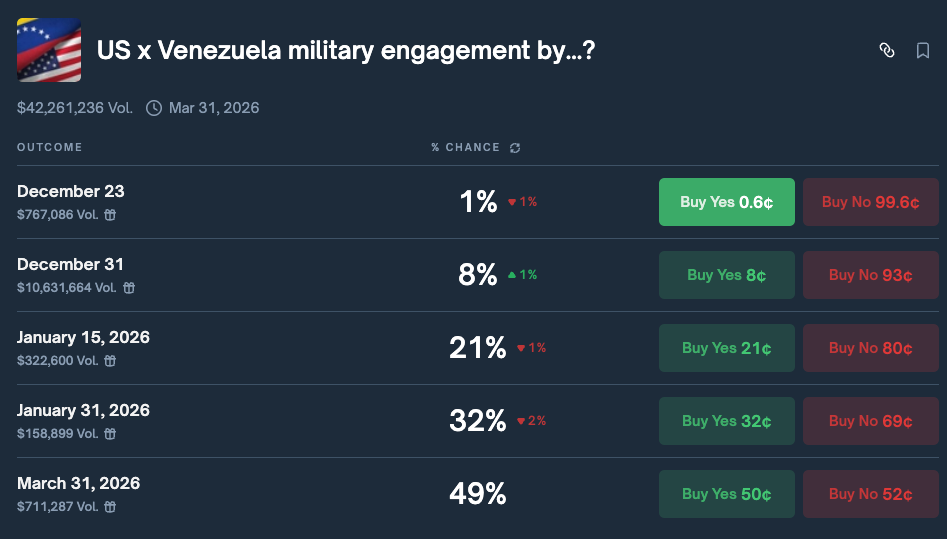
Western hemisphere being the main priority of the current administration combined with the current US military posture in the region makes me confident we will see a proper military engagement in the region eventually and I’m keeping my position, rolling them forward a bit as the time goes.
I am also holding a small amount of No ceasefire between Thailand and Cambodia by the end of the year:
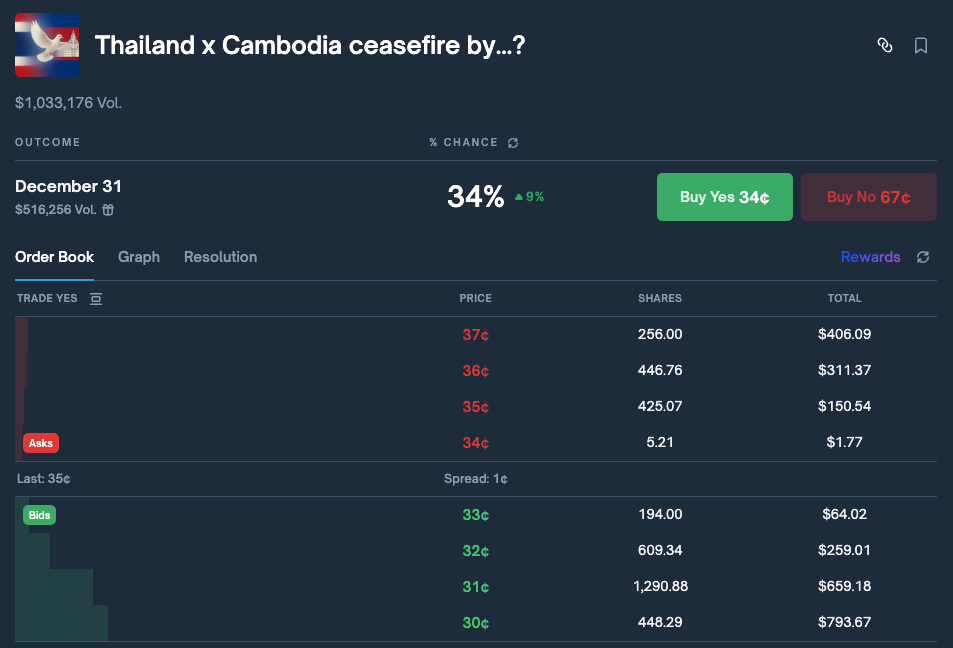
I will dive deeper into the region (so keep in mind both my sizing will change and my positioning can change) a week or so from now, but as we currently stand, we are poised to see more action in SEA in the foreseeable future.
Also coming soon, we shall have more markets around the region. From pure trade arrangements to more fluffy stuff like strait closures, treaties signed and alliances made.
I also aim to use the insight around Africa to counter elections in specific regions, of which I will keep you posted.
Wrap up
I do hope you enjoyed this piece. For me it was quite a journey - it made me realize how different, more obscure regions around the world impact global foreign policy and the cold war between team east and team west.
I’ll most probably put it in the name, but this is a part 1, a prelude to my deep dive on the Indo-Pacific. 12 months ago I was still exploring next frontiers. Now the whole situation is more clear.
Stay strong and see you soon!