
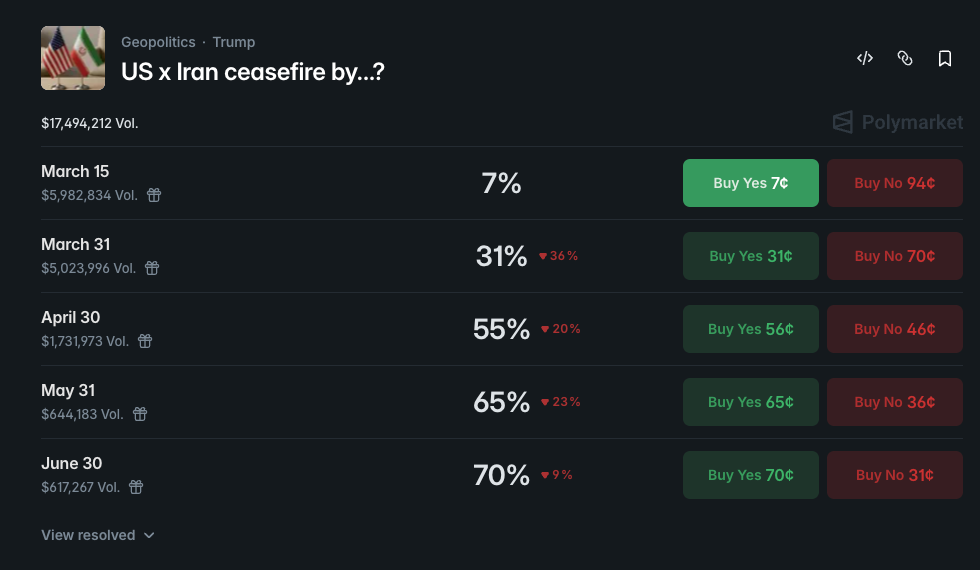
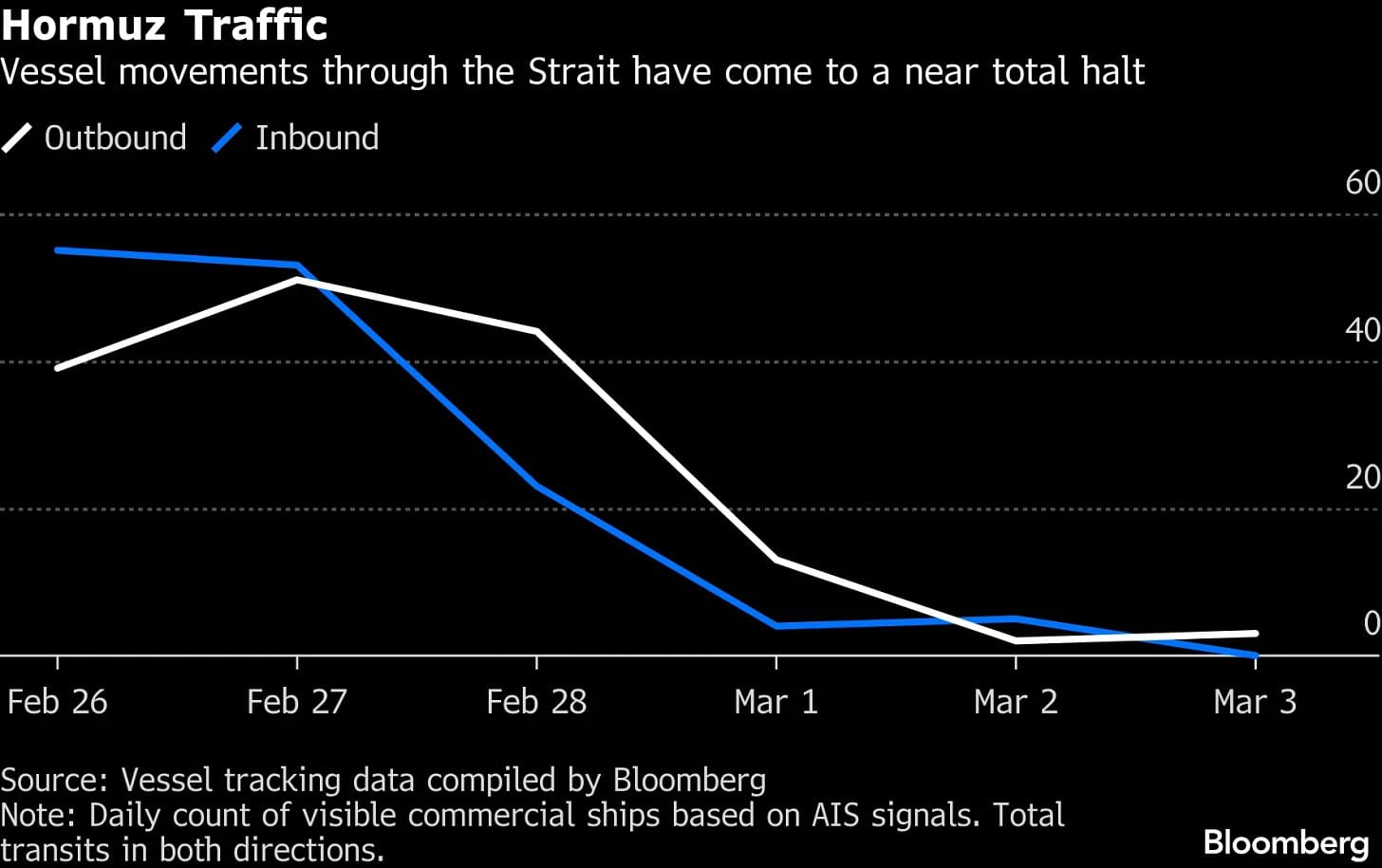
We are 7 days into the Iran war. The Strait of Hormuz is effectively closed and increasing number of oil & gas companies along with various industrials are triggering force majeure clauses. Prediction markets are increasingly pricing in a prolonged conflict:
As I said in my recent post on X, the situation is getting more dire by the hour:
All theses on a quick deescalation hinge on Iran being a rational actor. I assure you they are not. They are ready to collapse the global economy if they have to.So the key question is not wether the US can bomb them into oblivion. Of course they can, there is zero doubt regarding US military might. The question is at what cost and how quickly can this happen.As we enter day 6 of the conflict, the cascading effects of the Strait effective closure are getting exponentially worse by the hour; some of them we won't know until it's too late.Thus both sides are racing against time. Victory and defeat - not military, but political - are not well defined. At the same time Iran burnt a lot of bridges. Any diplomatic offramp in case of continued resilience of IRGC would need to offer them meaningful concessions; it is unclear wether either the US or Israel are ready for that.This is a very delicate situation that could easily spiral out of control and chances of that increase by the hour.
While most analysts are counting on TACO, they fail to provide a single off-ramp for both sides of the conflict. It’s time to seriously consider what can happen in the next few days and weeks. Especially since both sides are issuing statements suggesting they are ready to fight for a long time.
I’ve been critical and about this conflict and based my rationale for No strikes in large part because of what we are seeing right now. What’s more, the US is still relentless in pursuing its maximalist goals of total military capability obliteration and regime change.
However, if the conflict is to end fast, the only solution is a diplomatic one. This article is an exercise in mapping out these solutions, assessing their viability in the current context and assigning odds to them. If you’re tired of seeing mediocre armchair analyses on X, this is a piece for you.
Context
The key issue to understand is both sides’ goals and incentives. We need to game theorize scenarios that even with significant drawbacks for both sides, offer some kind of a win. Some believe that a unilateral cease of strikes by the US would end the conflict. It is not a given, however. At this point Iran is in an existential fight and thus has escalation control as well.
So first step is to define political goals of both sides. Then we can proceed to grade them by importance. Only then we can start to theorize off-ramps.
Iran
Iran’s situation is somewhat more straightforward, simply because it is more dire. It was widely understood in the western world that Iran would only attack Gulf States infrastructure, be it US bases or oil infrastructure, when faced with an existential threat.
For Iran the calculus is simple - they need to signal that the cost of annihilation is larger than potential benefit of one. By closing the Strait and harming gulf states, Iran is threatening to collapse global markets. It is a message to the US that if they continue, they will succeed, but they will also bring down the global markets with them.
Each day without a diplomatic solution will push Iran to deliver on these threats. Strait closure is a great mechanism for this. Each day forces more companies to stop production, which is oftentimes difficult and time-consuming to restart. Each day pressures Gulf State to seek an off-ramp as food supply diminishes. Each day introduces more chaos to the complex system of global trade and production with rippling effect on the regional and global economy. It is not the only tool, however.
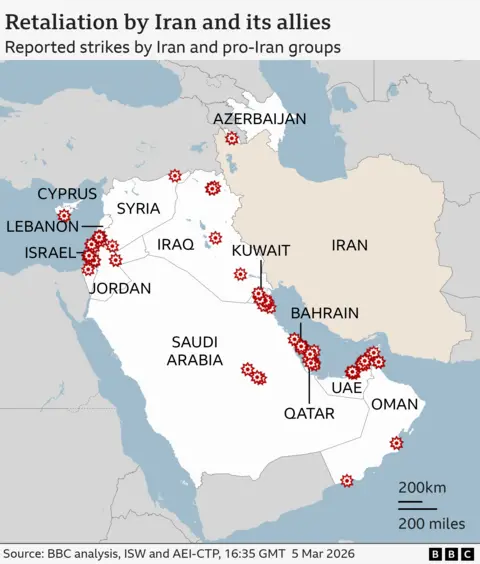
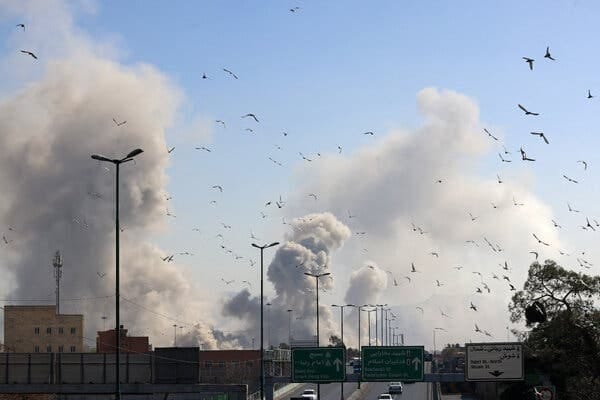
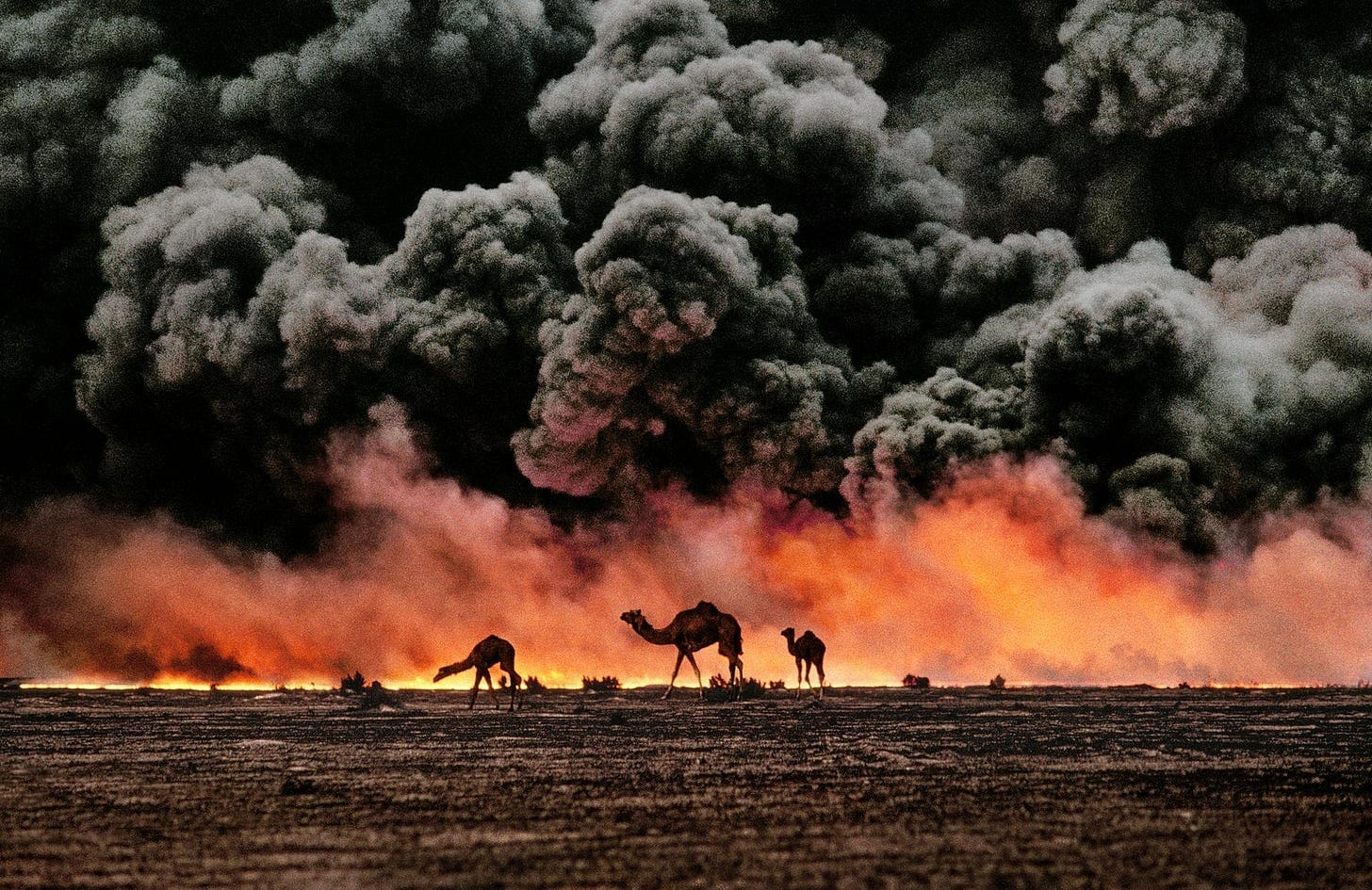
Iran can target desalination plants in the Gulf, effectively cutting water supply to millions of people stranded in the region. Bombing oil fields can induce fires that can take months to put out; Iraq bombing of Kuwait oil fields took 9 months to put out. 9 months without Gulf oil is a global energy crisis on the scale not seen before. These are the obvious targets, but there are plenty more.
Oil pipelines to Israel, Israeli nuclear plants, Suez canal, Gulf financial hubs are some other intermediate targets on the escalation ladder and the US cannot guarantee their safety from drone attacks.
I really cannot stress it enough - the fight Iran is fighting is an existential one. And the longer they can impose increasing costs, the better their bargaining position. At the same time, the longer the campaign takes, the more incentives would Iran need to stop. It is a bit counter-intuitive, so let me explain the strategic calculus here.
The only real incentive the US can give to Iran is guaranteed survival of the regime. However, the longer the country is bombed and infrastructure is degraded, the more costly the guarantee is. Today, for example a joint US-China-Russia peace guarantee a la Minsk accords would suffice. It could severely limit enrichment, missile program and proxy financing in return, but it couldn’t ban it as Iran needs to remain independent from their point of view. A week from now, however, any such agreement would require significant sanctions relief as well to prevent the economic collapse of Iran. Otherwise, there is no incentive for the regime to stop targeting Gulf energy infrastructure.
It’s a madman strategy. And if executed properly, it actually gives the regime a better negotiating position than before the strikes!
The US
Contrary to common belief, the US understands that! And it is the reason the US cannot start any negotiations now as they would negotiate from a position of weakness.
The initial US calculus was to collapse the decision making apparatus of the regime. To paralyze the decision making process without necessarily collapsing the regime - it is clear as day, as the first strikes targeted the Ayatollah and his closest, most trusted operatives. However, it quickly turned out that Iran was ready for that using the Mosaic Doctrine. I believe we can safely say that plan A failed, in part because the deep state was undermined by the nationalists and the tech / financial elites and couldn’t move fast enough. So what is plan B?
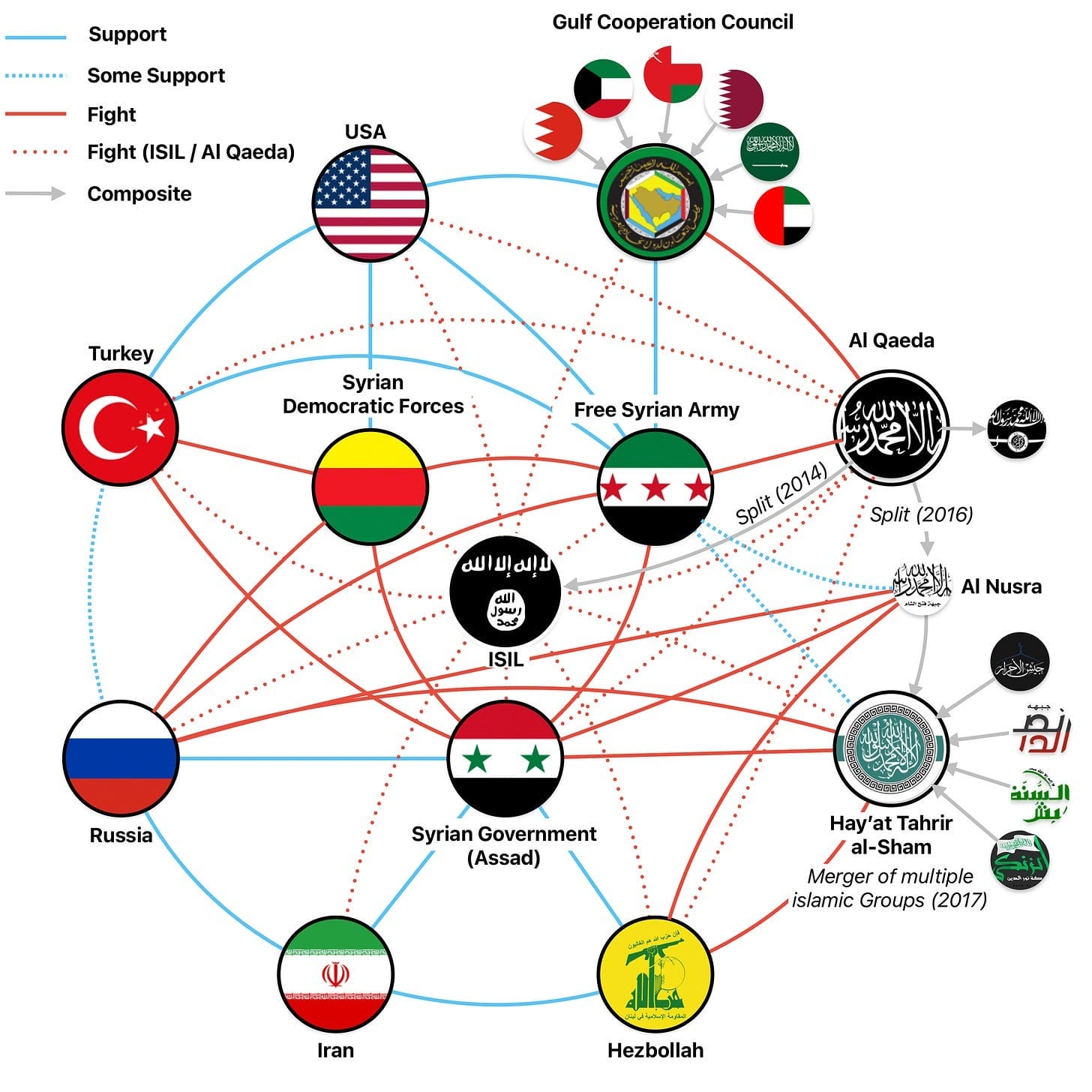
If the US wants to avoid a political defeat, they need to collapse the regime. And they need to do it fast. Thus the Kurds are being pushed to induce a civil war in Iran. The plan is to derail the IRGC strategic calculus. Faced with severely constrained launch infrastructure, they’d need to choose their targets between global infrastructure and internal turmoil.
It is not a bulletproof strategy, but it does inject a difficult strategic dilemma for the decentralized regime. Weaker links can undermine the madmen strategy by choosing to prioritize their own personal survival over the regime survival. How effective will that be? It depends on several factors, and most of them are not reassuring. Iran is a geographical fortress. Surrounded by water and mountains it poises significant difficulties for large troops movement. The decentralized military infrastructure might actually work in Iran’s favor as each mountain can be a trap, waiting to pin down moving forces.
There are also other, less direct actions the US is taking. From trying to induce a popular uprising to constant bombings, aimed at destroying the drone and missile launch infrastructure.
Conclusion
The current struggle is not about who will be better off. It’s about who will hurt less. Some analysts say that only the US is racing with time; others claim the regime days are numbered. But the reality is that both sides can be quite resilient.
However, the difference is in cost calculus. The US experiences the costs in a continuous manner. Each hour of the conflict uncovers additional costs to the US and the global economy. On the other hand, Iran doesn’t feel immediate costs. With their economy degraded and regime already decentralized, majority of their costs are at the point of regime collapse. There is little threat of munitions depletion, while food and water scarcity would happen either way, conflict or not.
The difference in cost distribution over time makes the US situation comparatively more difficult. As long as the regime stands, Iran is losing the war, but winning the negotiations!
Off-ramps
The war was initiated to change the negotiations dynamic. The US wanted to inflict pain on Iran to force it to concede enrichment, the ballistic missile program and proxy financing. The Iranian response by executing the madman strategy arguably made its position better. But let’s see how the new dynamic can play out.
Scenario 1: Agree To Disagree
In this scenario, at some point in the next few days / weeks, both parties stop fighting as both sides deem the costs too high to continue. However, there is no permanent solution to their issues. Both sides proceed to lick their wounds and the prospect is another war in the next few months / years.
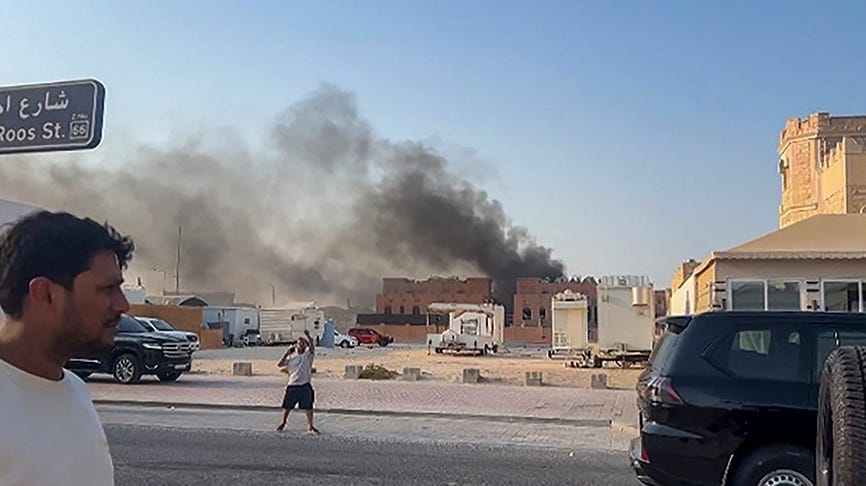
In such a scenario it is clear though that in the following conflict, the US would have an outsized advantage over Iran. Sanctions and sever damage to the Iranian infrastructure and economy would prevent it from rebuilding their capabilities even to the level they possessed before the war. Doubly so considering increased difficult in sanctions evasion. It would be a difficult sell domestically, considering that the US killed their leader.
At the same time, Iran now continues to have an outsized ability to impose costs on the US and the global economy, making it strategically viable to continue the effective Strait closure at the least. From Iran’s point of view, a cessation of hostilities should include an affirmation of core issues like uranium enrichment and ballistic program development.
Thus I believe this scenario has only 10% chances of materializing. The odds can increase if we see signs of global cooperation to end the conflict.
Scenario 2: Negotiated Deal
Considering Iran’s willingness to negotiate, another scenario includes a wide deal that includes the issue of ceasefire, enrichment, ballistic program and sanctions. The materialization of new leverages changes the position of both sides.
However, such a scenario poses significant difficulties for the US. A deal that was marginally better than JCPOA was already on the table and the US refused to engage with it. Looking at cascading effects on global economy, the US would also have trouble to impose any stricter measures.
Such a deal would be a hard sell, both domestically and internationally. Questions would arise around the viability of initiating strikes. Gulf countries would struggle to understand why they needed to endure structural damage to their image and economies if the end result is something that was achievable without such a sacrifice.
However, deteriorating energy markets might force US to accept some temporary concessions. After all, all deals are broken at some point. Odds: 20%, with some upside potential if main global powers (US, Russia, China) are seen cooperating to end the conflict. That being said, current messaging from eg. Russia points at Putin looking to use the oil shortage to his advantage, rather than bailing out global markets.
Scenario 3: Prolonged Conflict
In this scenario the US believes it can impose higher costs on the enemy and perceive a prolonged conflict as further chance to improve their negotiating position. The US would look to collapse the regime and induce a civil war. By design, a failed state, like Libya or Syria, would be unable to pursue either uranium enrichment or ballistic missile program. It would also align with the US stated goals of total military capability obliteration and regime change.
Iran would continue on the path of the madman strategy, aiming to take down regional oil fields in their last effort to survive. It is unclear if they succeed as the US will do all it can to protect key oil assets in the region. However, considering the cascading effect on the global economy, and time needed to actually collapse the decentralized regime, the Iran war would be extremely likely to push the global economy into a deep recession.
However, in case the US is able to collapse the regime in due time, part of the damage to the global economy could be avoided. The aim would be to contain the economic damage to team west adversaries. The US positioned itself as energy exporter, looking to avoid most of the damage, while being the crucial lifeline for the most affected countries on team west.
Iran would become a failed state, engulfed in a civil war as different factions and ethnic groups inside and outside the country would join the fight for power. Key issue here would be containment of the conflict to Iran territory, preventing both Iraq and Pakistan-Afghanistan from being the unfortunate casualties of the war.
I’m unable to assess the severity of economic damage, but this scenario is in my opinion the most likely. I give it 70%. However the odds of the regime collapse are not equal - the 70% include also a prolonged conflict with a resilient regime.
Prediction Markets
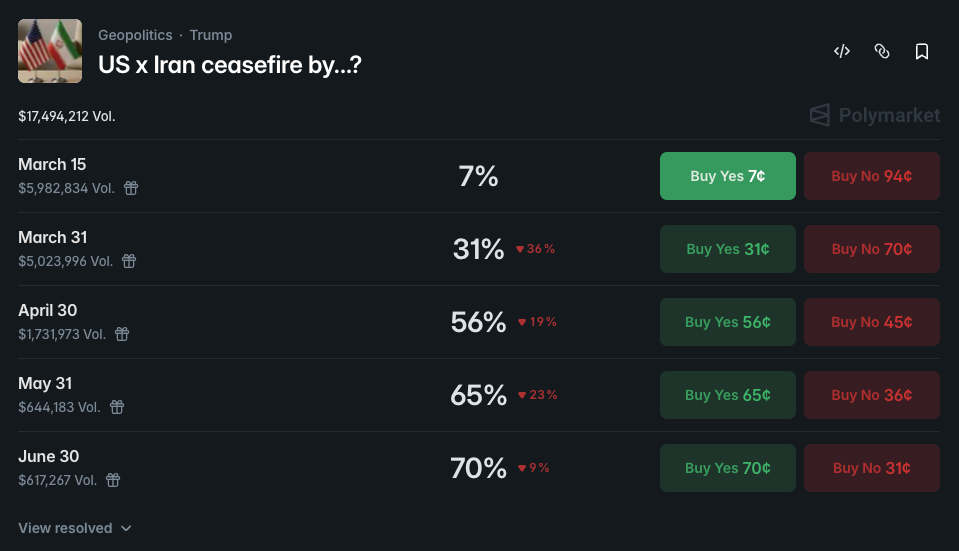
I continue my initial assessment of No ceasefire deal in the immediate future and hold my positions. Both Scenario 1 and Scenario 3 represent a future with no official deal. My fair value of 80% chances of no ceasefire till the end of the month starts to align with market consensus:
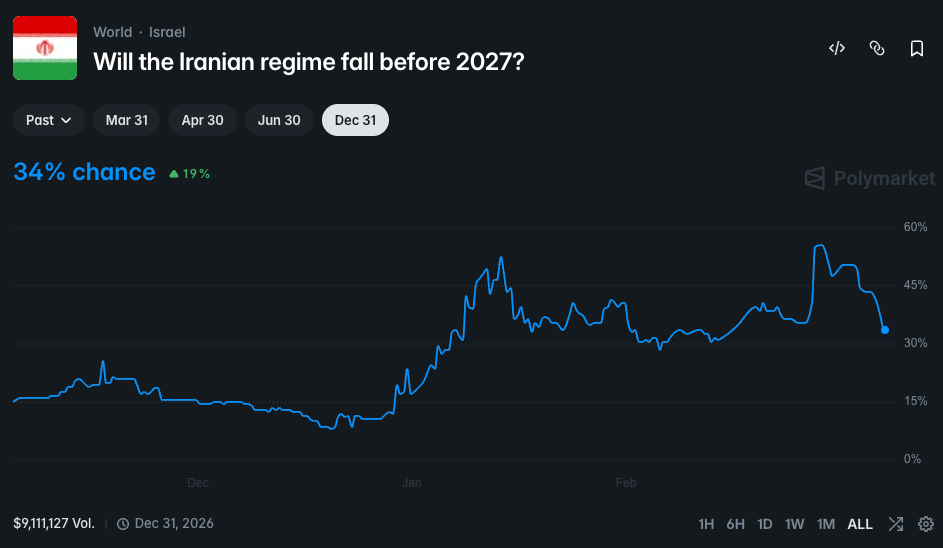
When it comes to regime collapse however, I cannot say the odds align with Scenario 3. While 70% represents the broader prolonged conflict chances, not all possible futures here include regime collapse. Considering the fog of war and limited information on the morale of decentralized IRGC, I believe the market prices regime collapse correctly in the long term:
Thus I have no significant positions on the market.
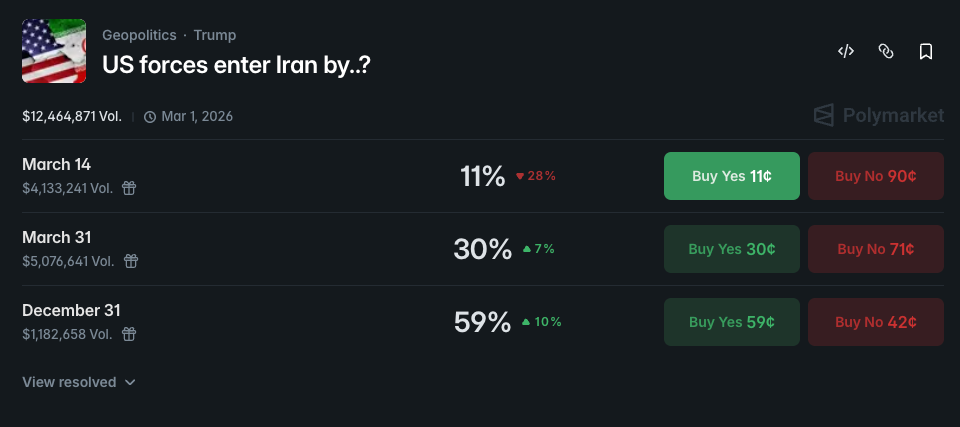
A prolonged conflict scenario also has strong chances of US forces on the ground in Iran. Not only an official deployment is likely in the longer term. Rumors like the one yesterday, of the rescue mission into Iran to save the F15 pilot (which is now denied by CENTCOM), would also resolve the market to Yes. So will any special ops units sent on mission. I believe Yes on the long term market here is quite around fair now, with my assessment of 70% fair value:
I also hold some Yes shares, mostly on the long-term market.
Wrap up
Today I will also be on the Space with Ivan Cryptoslav to discuss the situation. While current situation is dire, most of the consequences are still ahead of us. However, current situation on the ground indicates that at least for now, these consequences are not taken into account seriously.
The next few days will give us more clarity. As the effects on global markets cascade, the sunk cost fallacy will start to kick in for the US, making any diplomatic off-ramp (Scenario 1 & 2) increasingly difficult to swallow.
I also hope to come back to making videos this weekend, where I’d like to focus more on showcasing second and third order effects on the global markets.
Especially in these difficult times, stay strong! See you soon!